Custom Roman Shades in Denver: The Complete Guide to Fabrics, Folds, and Linings
Everything Denver homeowners need to know about custom Roman shades: fold styles, designer fabrics, linings, motorization, and how to choose the right combination for Colorado light.
Updated September 14, 2026
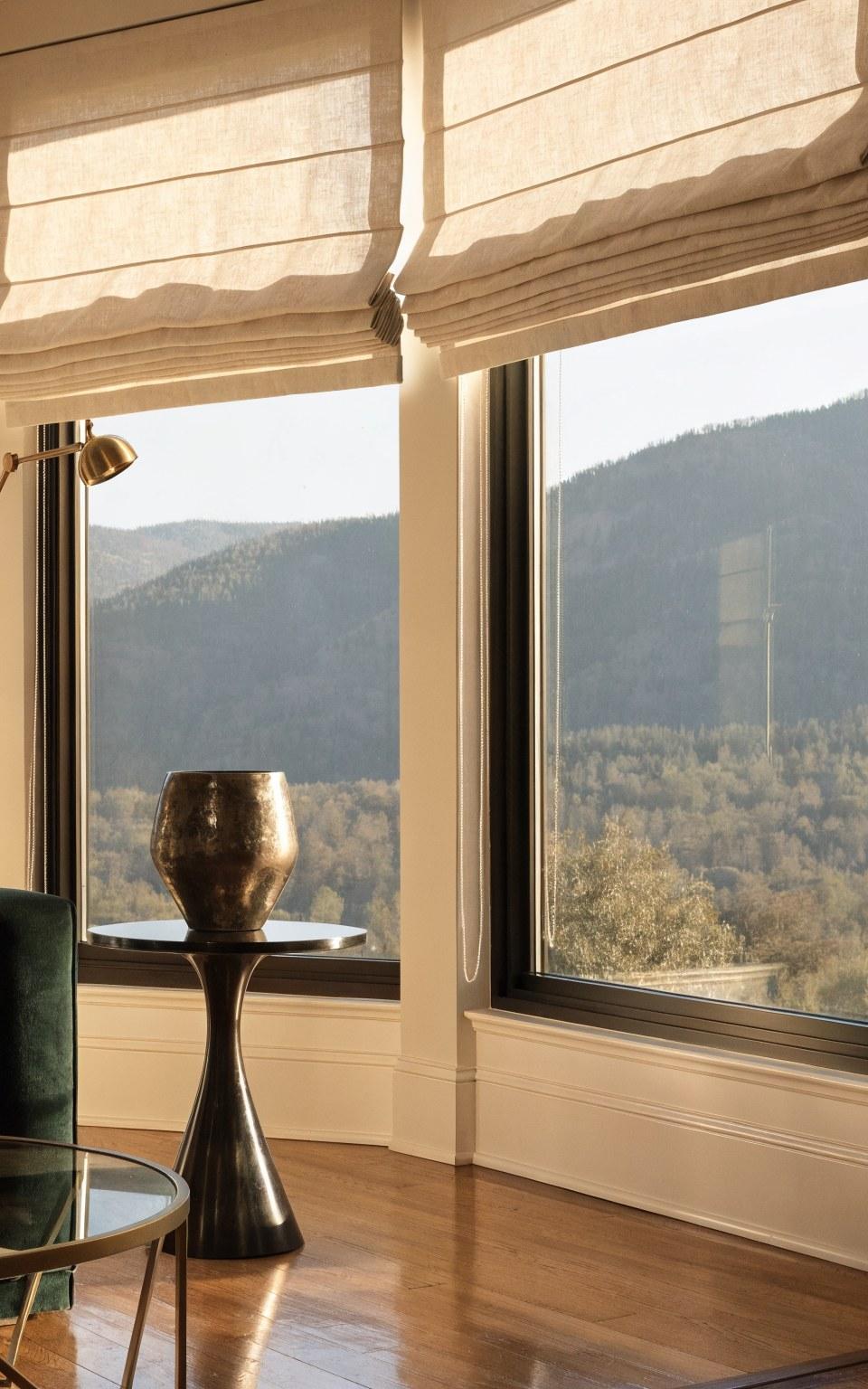
Custom Roman shades are fabric window coverings that fold into soft, even horizontal pleats when raised and hang as a smooth tailored panel when lowered. For Denver homes, they solve two problems at once: they bring the softness of drapery to windows where full panels will not fit, and the right fabric and lining combination tames high-altitude sun without blocking your view of the Front Range.
This guide walks through every decision you will make when ordering custom Roman shades in Denver, from fold style and fabric weight to linings, lift systems, and motorization. It is the same framework our designers use during in-home consultations across the metro, from Cherry Creek colonials to Highlands Ranch new builds.
What makes a Roman shade truly custom?
A custom Roman shade is built to the exact width and drop of your window, from a fabric you select, with a fold style, lining, and lift system chosen for that specific room. Ready-made shades come in a handful of standard sizes and fabrics. A custom shade is cut and sewn for one opening, so the folds stack evenly, the pattern matches across multiple windows, and the hem clears your sill by exactly the right margin.
That precision matters more in Denver than in most markets. Homes here mix oversized great-room windows, deep-set historic frames in neighborhoods like Washington Park, and west-facing glass that takes direct afternoon sun at 5,280 feet. A shade built for the opening always outperforms one that almost fits.
Custom also means the details are yours to decide: contrast banding, decorative trim, coordinated valances, and hardware finishes that match your drapery rods and cabinet pulls. Our custom Roman shades service in Denver includes fabric selection in your home, so you can see each textile in your actual light before committing.
Which Roman shade fold style fits your home?
The fold style controls how the shade looks when it is raised, and it is the single biggest style decision you will make. There are four styles we specify most often in Denver homes.
Flat fold. A clean, continuous panel with no horizontal seams when lowered. Flat folds show off large-scale patterns and suit modern and transitional interiors. They stack neatly and read as tailored rather than fussy.
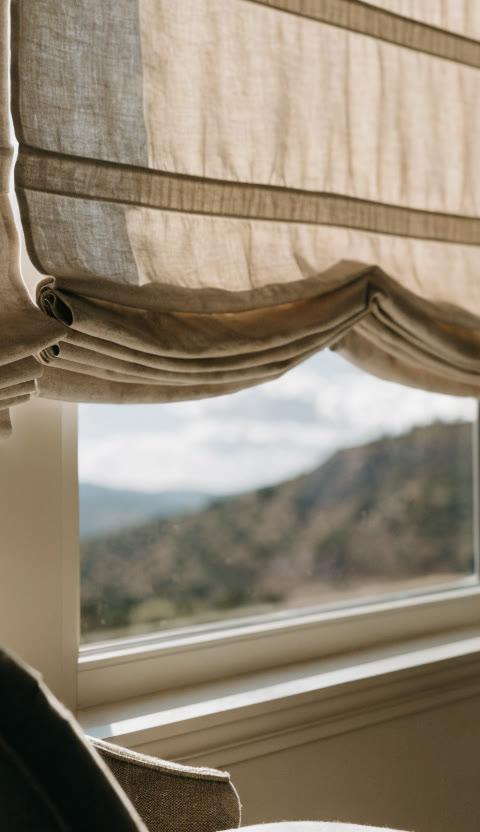
Soft fold (hobbled). Gentle cascading loops that remain visible even when the shade is fully lowered. Soft folds add volume and a relaxed elegance, and they work beautifully in living rooms and dining rooms where you want a fabric-forward look.
Relaxed Roman. A gentle curve along the bottom edge with no rigid structure. Relaxed shades feel informal and romantic, ideal for bedrooms, breakfast nooks, and spaces with a softer design language.
Front slat (knife pleat). Crisp horizontal tucks that create defined lines across the shade. This style bridges traditional and contemporary and holds its shape well on tall windows.
If you are weighing a softer fabric treatment against a sleeker minimal look, our comparison of Roman shades vs roller shades in Denver breaks down where each style wins.
How do you choose the right fabric for Colorado light?
Denver gets roughly 300 days of sunshine a year, and UV intensity increases with elevation. Fabric choice is therefore a performance decision, not just an aesthetic one. Solution-dyed acrylics and tightly woven poly blends resist fading on south and west exposures. Natural linens and cottons are gorgeous on north and east windows where light is gentler.
Weight matters too. Lightweight sheers and open weaves filter glare while preserving your mountain view. Mid-weight drapery fabrics balance privacy and light. Heavyweight textiles with a blackout lining turn a Roman shade into a true room-darkening treatment for bedrooms and media rooms.
During a consultation we hold fabric samples against your window at the time of day the room gets its harshest light. A fabric that looks perfect at noon can read completely different at 5 PM in August, and seeing it in place removes the guesswork.
Do Roman shades need a lining?
In most Denver rooms, yes. A lining protects the face fabric from UV degradation, adds body so the folds hang crisply, and improves insulation against both summer heat and winter cold. Unlined shades make sense only for decorative applications on protected exposures.
There are three lining levels. A standard privacy lining diffuses light and hides the shade's lift cords and rings from the street. A thermal lining adds an insulating layer that helps on older single-pane windows. A blackout lining blocks nearly all light and is the right call for bedrooms, nurseries, and media rooms.
Can Roman shades be motorized?
Yes, and motorization is one of the most requested upgrades we install. Battery-powered and hardwired lift systems raise and lower Roman shades on a schedule, by remote, or through smart home scenes. Motorization is especially valuable on tall or hard-to-reach windows, and it eliminates lift cords entirely, which is the safest option for homes with young children and pets.
Motorized Roman shades integrate with the same automation platforms as our other custom shade collections, so a whole room can move together on a single command.
Where do Roman shades work best in a Denver home?
Roman shades excel anywhere you want fabric softness without floor-length drapery: kitchens, breakfast nooks, home offices, bathrooms, and bedrooms. They are also the natural partner to drapery in layered designs, where a Roman shade handles daily light control and stationary drapery panels frame the window for depth.
In Denver's newer builds with wide window walls, we often specify a row of matched Roman shades instead of a single wide treatment. Individual shades operate independently, stack tighter, and give you zone-by-zone control over glare as the sun moves.
How much do custom Roman shades cost in Denver?
Most custom Roman shade projects in Denver start around $300 to $700 per window installed, with designer fabrics, blackout linings, and motorization adding to the investment. Fabric tier and window size move the number more than any other factor. For a full breakdown of what drives the price, read our Denver Roman shade pricing guide.
How do you get started?
Every Blinds Couture Roman shade project begins with a complimentary in-home design consultation. We measure your windows, bring the fabric library to you, and provide a written all-in quote before any work begins. Your shades are then fabricated to your exact specifications and installed by our own team.
Roman shades have been a signature of our work for more than 25 years. If you are ready to see what custom fabrication looks like in your home, we would love to show you.
What happens after you choose?
Professional measuring and installation. Every custom order is measured opening by opening and installed by our team. See what that involves in the Denver installation guide, and compare product types in our shade styles guide.
Serving Denver since 1999
Blinds Couture Showroom
590 Quivas St
Denver, CO 80204
(720) 729-0091
Blinds Couture
Denver's premier custom window treatment studio
With over 25 years serving Colorado homeowners and designers, Blinds Couture brings expert knowledge in custom drapery, blinds, shades, shutters, and motorized window treatments. Our team combines design expertise with hands-on craftsmanship to create beautiful, functional spaces.
Learn more about our team